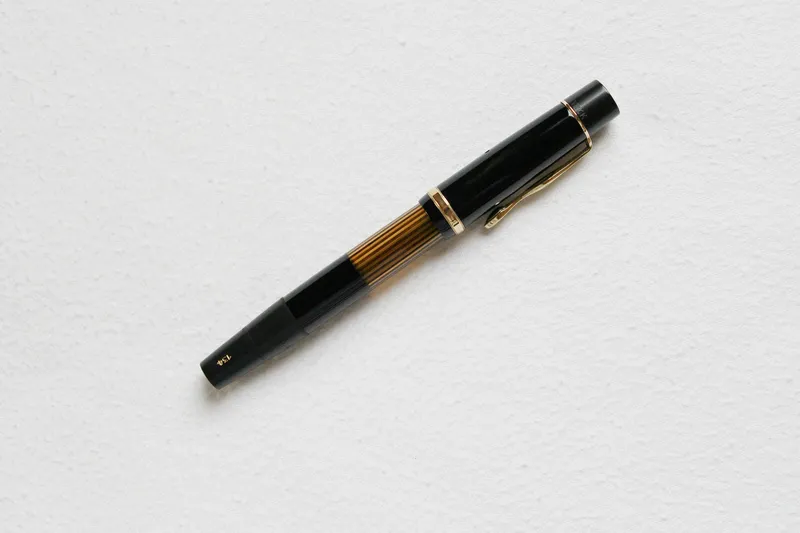
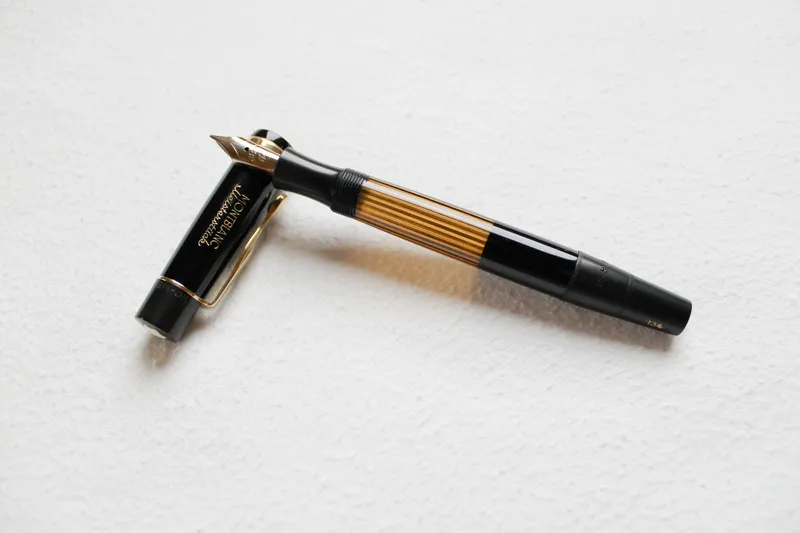
New Old Stock should mean something simple: a pen that escaped its working life. Made, perhaps sold, and then — a drawer, a stockroom, an estate — until now. Not “lightly used.” Not “well restored.” Escaped.
The phrase gets stretched because it commands a premium. So rather than argue definitions, we document the details that make the claim checkable.
The tells
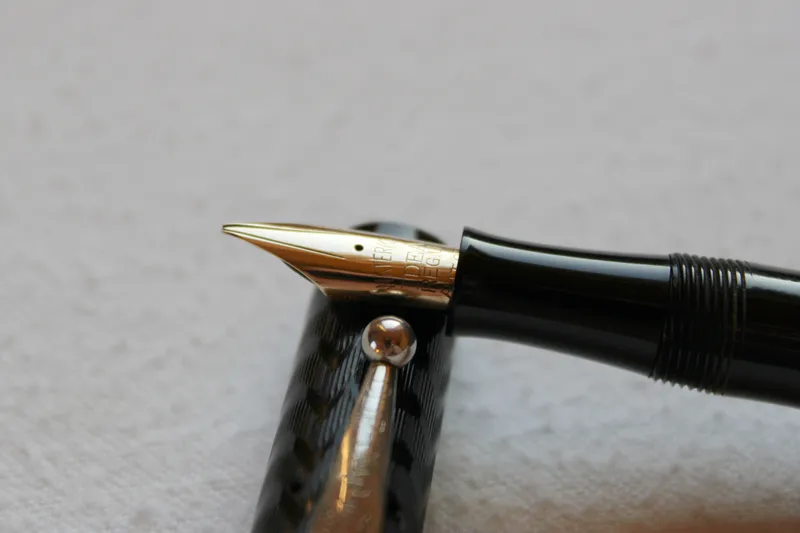
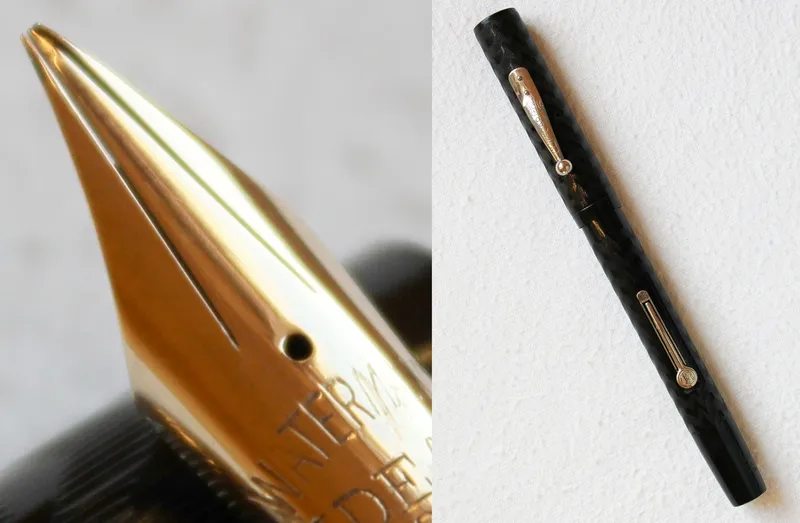
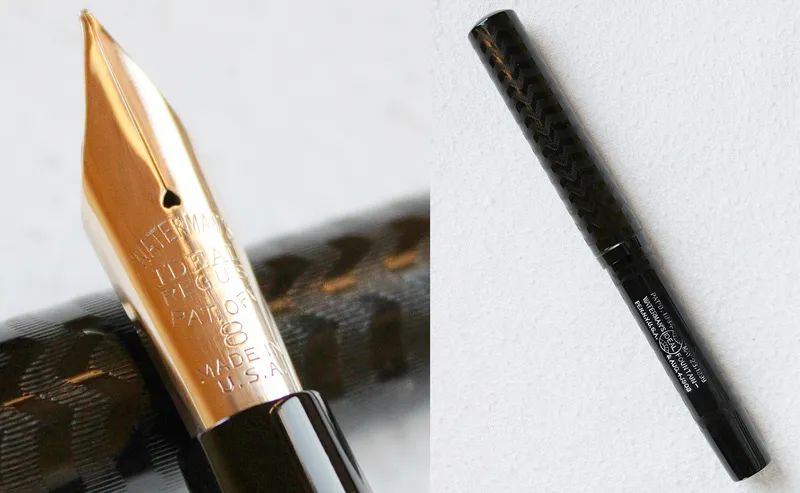
Imprint depth. Every pass of a polishing cloth takes metal-thin layers of hard rubber or celluloid with it. A pen handled for decades has softened imprints; a true NOS survivor’s markings stand ultra deep and crisp, edges sharp under magnification. This is the first thing we photograph.
Original paint fills. Waterman filled some end imprints with red paint at the factory. That paint sat proud of the surface and wore away with the first years of pocket life — so an end imprint that retains its original red paint fully intact, as on our 54 Music Nib, is powerful evidence the pen never had a pocket life at all.
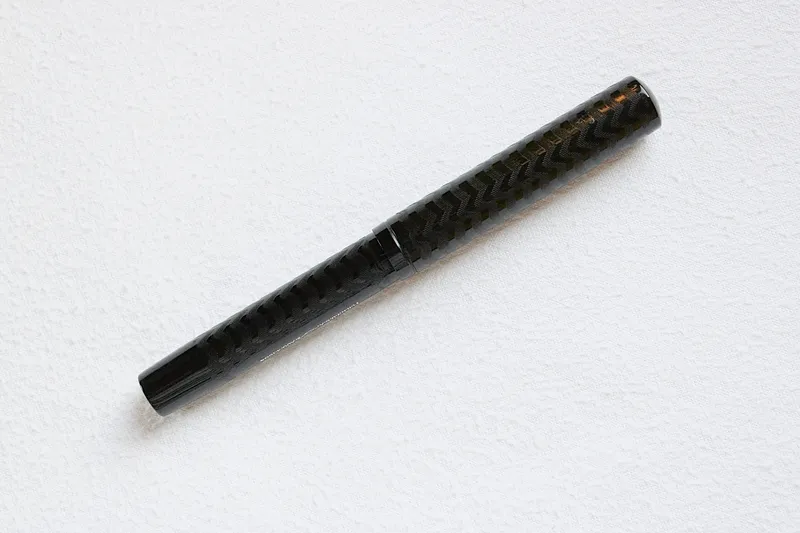
Pattern definition. Chased and rippled hard rubber flattens under handling. Chasing that stands deep across the whole surface — not just in sheltered corners — survives only on pens that were barely touched.
”NOS” and “serviced” are different facts
Here is the seeming contradiction that confuses listings everywhere: a pen described as New Old Stock and professionally serviced. Which is it?
Both — because they describe different things. Condition grades describe preservation state: what a century did, or didn’t do, to the object’s surfaces and markings. Service describes mechanical readiness: an eighty-year-old ink sac or piston seal has perished whether the pen was used or not, and we will not offer a pen that cannot write. Every piece in the collection is serviced and brought to full writing order; the preservation grade reports what time left behind. Our inspection reports state both facts separately, on every pen.
Honest NOS includes its flaws
Time leaves traces even on untouched objects — storage marks, micro-hairlines near a cap star, a shade of tonal drift. We document these openly because they are consistent with storage rather than use; a “flawless” century-old pen is a bigger red flag than an honest one. When you read “New Old Stock, with minor scratches above the imprint — a natural characteristic of storage,” that is not hedging. That is the description doing its job.