Ask when a pre-war Montblanc was made and you will usually receive a decade. The pens themselves are often more precise — you only have to read what the factory stamped into them.
German manufacturers marked patented mechanisms with D.R.P. — Deutsches Reichspatent — followed by the patent number, and Montblanc’s piston-filled models of the 1930s carry these markings in a documented sequence. Each imprint generation replaces the last, which turns the markings into a chronology.
The sequence
The first issue of the 23x piston-fill line in 1935 bears “D.R.P. ANGEM.” — angemeldet, patent applied for. The protection had been requested but not yet granted, so the barrels said exactly that.
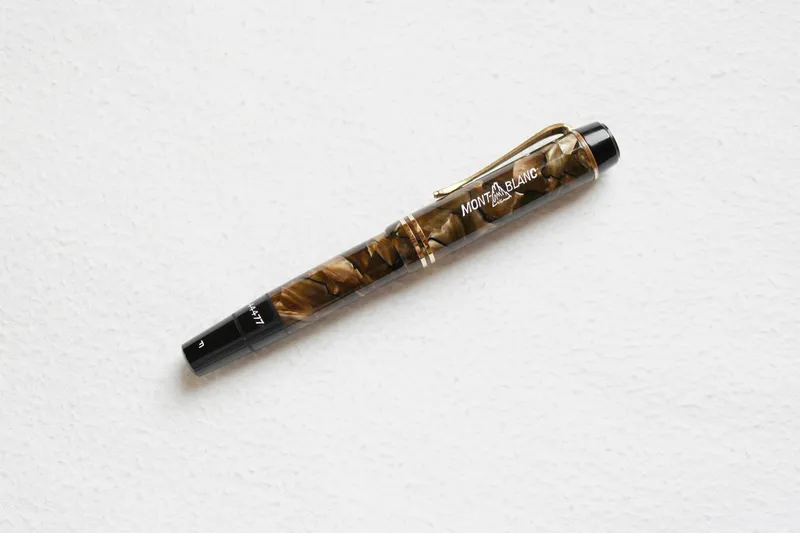
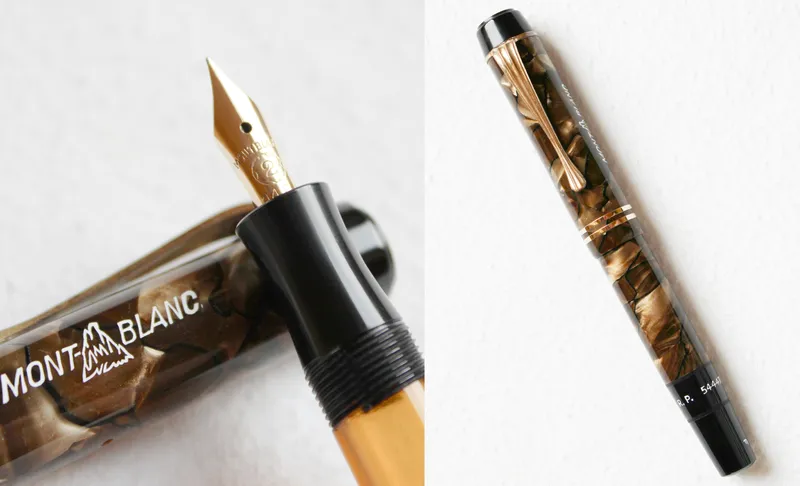
Next comes the “D.R.P. 544477” imprint. This patent had been granted to Montblanc in 1932 and was applied across different models and filling systems in the following years; on the 23x line it identifies the second issue.
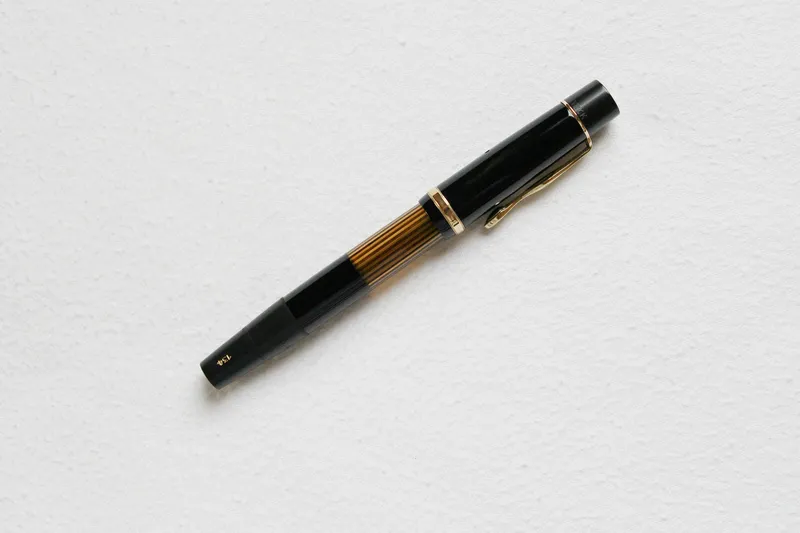
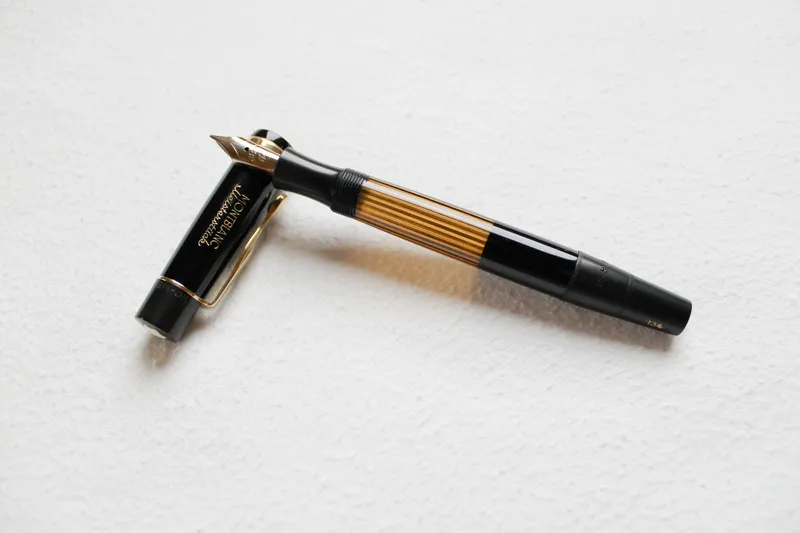
From 1937 the line moves to “D.R.P. 652405”, the patent that accompanies the late pre-war generation — including the first issue of the model 134, produced circa 1938–1939.
What this does to a pen on the desk
It compresses uncertainty. A 23x-series pen carrying the 544477 imprint cannot be earlier than the ANGEM generation it replaced, nor later than the 652405 generation that replaced it — which attributes it to the narrow window around 1936. Effectively a single year of manufacture, established not by estimate but by the object itself.
In our collection the Montblanc 232 Brown Marble is dated precisely this way. The 134 Long Ink Window carries the later 652405 marking — with, as it happens, a rare factory double-impression in the numerals, the kind of anomaly that gives an individual pen a fingerprint no other example shares.
Why we lean on imprints
A description that says “1930s” is an opinion. An imprint photographed in macro is evidence. Wherever a piece in our collection can be dated by what it records of itself — patent generations, imprint configurations, hallmarks — that argument is documented on the piece’s page, where you can examine the photograph and check the reasoning.
Every dating argument in the collection is reviewed before publication; where evidence is thin, we say so.