Most collectible nibs are prized for what they can do — flex, shade, sing. The Manifold nib is prized for what it refused to do: bend.
A nib built for carbon paper
In the offices of the early twentieth century, copies were made by manifold writing — interleaving sheets with carbon paper and pressing hard enough that the bottom copy stayed legible. An ordinary flexible gold nib would splay and die under that treatment. So Waterman engineered the opposite of its celebrated flex: nibs cut from exceptionally thick gold stock, with a short slit and virtually no give — instruments for accountants, clerks, and anyone whose signature had to exist in triplicate.
They were essential professional tools, produced in comparatively small numbers for a working audience — and then the typewriter and the duplicating machine made them obsolete.
Why so few survive
A nib bought for heavy pressure received heavy pressure, every working day. Many Manifold nibs were worn down, sprung, or discarded with the pens that carried them. The collecting consequence is an inversion: the nib designed to be indestructible is now distinctly scarce, and surviving examples — particularly in large-format pens — are sought precisely because they worked too hard to survive.
Reading a Manifold today
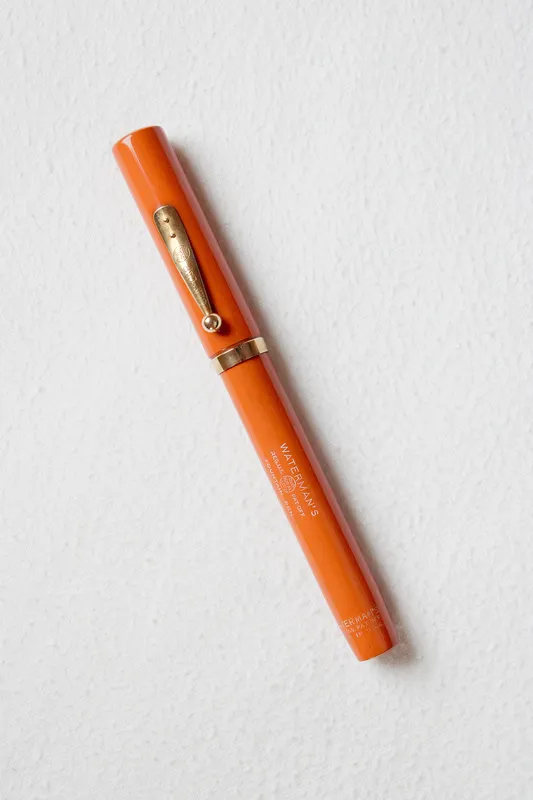
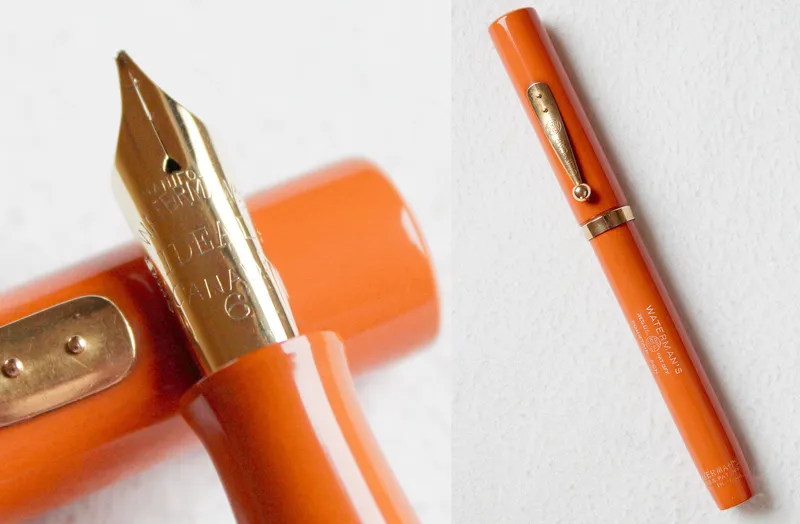
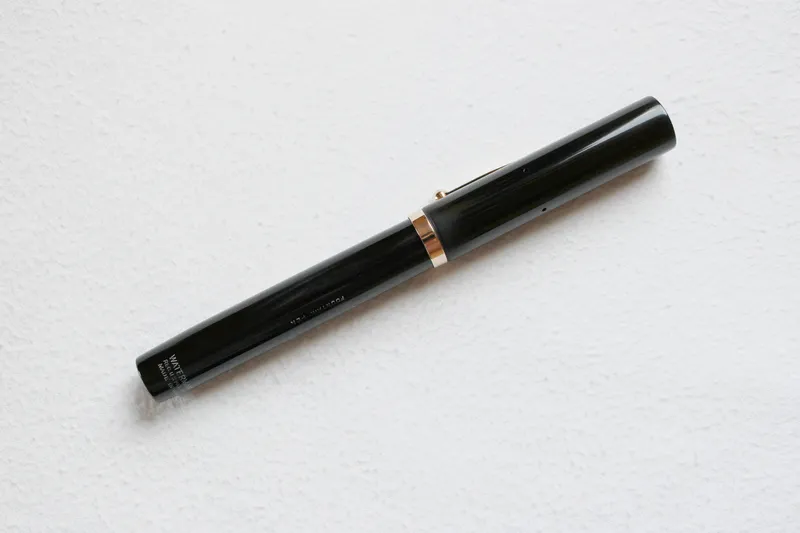
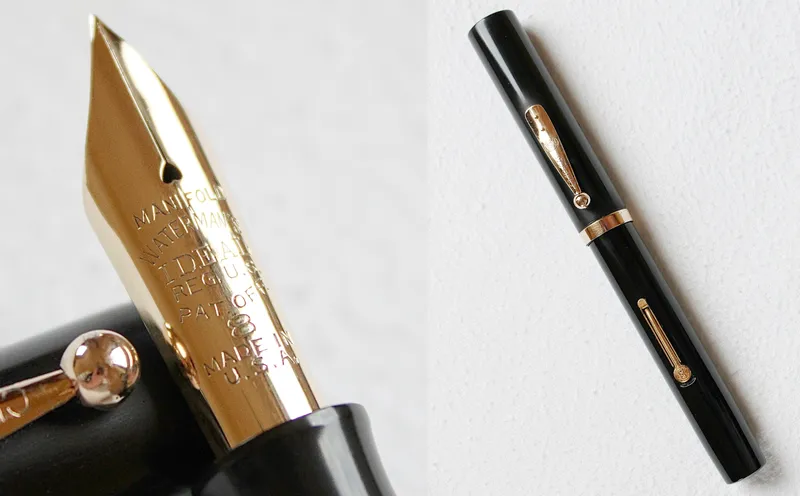
Two examples in our collection show the breadth of the type. The Waterman 56 in Cardinal carries a Canadian-manufactured Manifold with rare side hallmarks — markings encountered on only a very small number of period nibs, and a reminder that Waterman’s nib production spanned an empire of factories. The oversize Waterman 58 pairs the nib with the big lever-filler format that serious offices favoured: a pen of presence, built for purpose.
Neither will give you flexing line variation; that was never the assignment. What they give you instead is precision, durability, and the tactile record of a vanished office culture — the eight-decade-old equivalent of finding a mechanical keyboard that outlived its company.
Both pieces carry full inspection reports — including, in the 56’s case, two disclosed condition matters documented in the open. That is how we believe condition should be done.